Process Manual
Welcome to the world of Coaching!
Coaching is a transformative and dynamic process that empowers individuals to reach their highest potential, both personally and professionally. For beginners, let’s start by understanding how coaching stands apart from other related professions.
What is Coaching?
According to the International Coaching Federation (ICF), coaching is:
“Partnering in a thought-provoking and creative process that inspires a person to maximize their personal and professional potential.”
Think of coaching as a collaborative partnership where the coach and the client work together to unlock possibilities and drive meaningful change.
How Does Coaching Differ from Other approaches?
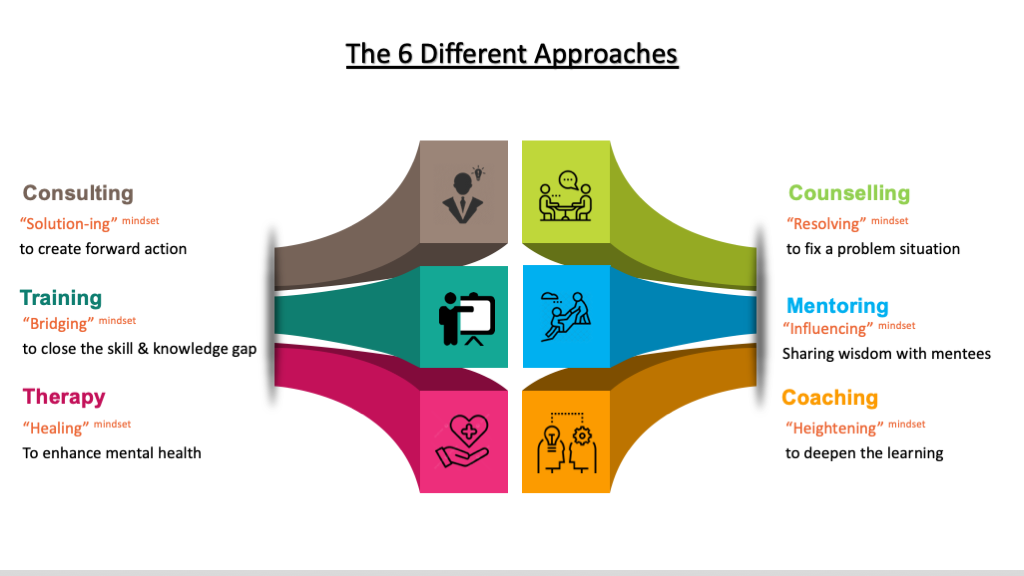
1. Counseling: Healing the Past

Counseling, often referred to as “talk therapy,” involves working with a trained professional to address personal issues and emotional distress. It’s a confidential and non-judgmental space for exploring and resolving past and present problems.
Key Differences:
Focus on Past & Present: Counseling often delves into past experiences to understand and heal emotional and psychological issues.
Goal: The primary aim is to provide relief from psychological distress and improve emotional well-being.
Approach: While counseling analyzes problems, coaching is about co-creating solutions and focusing on the future.
Example
Scenario: Jane is overwhelmed with stress and anxiety due to personal challenges.
Counseling Path: Jane explores her feelings with a counselor, who helps her uncover the root causes of her anxiety and provides strategies for managing it.
Coaching Path: Jane, with her coach, sets goals for a balanced life and creates actionable steps to achieve a stress-free routine.
2. Mentoring: Sharing Wisdom

Mentoring is a relationship where an experienced individual (the mentor) offers guidance, support, and knowledge to a less experienced person (the mentee), aiding their growth.
Key Differences:
Experience-Based Guidance: Mentoring is rooted in sharing personal experiences to develop specific skills and knowledge.
Goal: Mentoring aims at personal and professional growth, often related to career advancement.
Approach: While mentoring involves giving advice, coaching empowers individuals to discover their own paths and solutions.
Example:
Scenario: John, a junior manager, is eager to advance his career.
Mentoring Path: John receives insights and advice from a senior manager on navigating his career and overcoming challenges.
Coaching Path: With a coach, John identifies his career aspirations and crafts a plan to enhance his skills, pushing himself to new heights.
3. Training: Building Skills

Training is the structured process of transferring knowledge and skills to address specific gaps and improve capabilities.
Key Differences:
Knowledge Transfer: Training focuses on imparting new skills and knowledge to improve performance.
Goal: The aim is to fill skill gaps and enhance competence in specific areas.
Approach: Training is about providing instructions, while coaching is about unlocking the coachee’s latent potential.
Example:
Scenario: Sarah needs to learn a new software tool for her job.
Training Path: Sarah attends a workshop to learn the software through hands-on practice.
Coaching Path: With a coach, Sarah aligns her new skill with her career goals, integrating it seamlessly into her workflow.
4. Consulting: Providing Expertise

Consulting involves offering expert advice and solutions to individuals or organizations based on specialized knowledge.
Key Differences:
Expert-Driven Solutions: Consulting is focused on diagnosing issues and providing actionable solutions.
Goal: The objective is to resolve specific problems or optimize processes.Consulting is about diagnosing problems and offering solutions.
Approach: While consulting delivers solutions, coaching helps individuals develop their own strategies and answers.
Example:
Scenario: A company faces declining sales.
Consulting Path: A consultant identifies weaknesses in the sales process and provides a detailed action plan to boost sales.
Coaching Path: A coach engages the sales team in discovering strategies to improve performance, enhancing their skills and motivation.
5. Therapy: Healing the Mind
Therapy is the clinical treatment of mental health conditions using psychological techniques.
Key Differences:
Clinical Focus: Therapy addresses mental health issues, using techniques to treat psychological disorders.
Goal: The goal is to improve mental health and emotional functioning.
Approach: Therapy is about healing psychological issues, while coaching focuses on achieving goals and maximizing potential.
Example:
Scenario: Lisa struggles with depression.
Therapy Path: Lisa works with a therapist who provides clinical treatment for her depression.
Coaching Path: In a coaching context, Lisa focuses on setting future goals and developing strategies, provided she’s not in acute distress.
—
Conclusion: Embrace the Unique Power of Coaching
Understanding these distinctions is essential for every coach.
Knowing what coaching is—and what it’s not—enables you to guide your clients more effectively on their journey to success. Let’s continue this exploration together, unlocking the true potential of coaching!